Scientists are trained to look forward, not back. The history of the field enters graduate training as a handful of first-lecture anecdotes, and after that it disappears from the syllabus. A working researcher who knows something about how their field developed is better equipped than one who does not, and that claim is not obvious.
Casadevall and Fang made the case for it in a 2015 editorial in Infection and Immunity.1 Their argument was that historical awareness shapes better research: without it, researchers repeat old mistakes and overlook old discoveries. What does the history of a field give a working researcher that the current technical literature does not?
# Ideas do not survive on technical merit alone
The history of science is full of cases where the best available evidence lost to social forces: institutional authority, political protection, or inertia. Thomas Kuhn built his account of scientific progress around this observation in The Structure of Scientific Revolutions.2
Ignaz Semmelweis is the standard example. In the 1840s he found that poor hygiene among doctors was causing deadly infections in maternity wards, and that a simple handwashing protocol cut mortality. The medical establishment rejected the findings and destroyed his career, not because the data was wrong but because the conclusion threatened the authority of senior physicians.
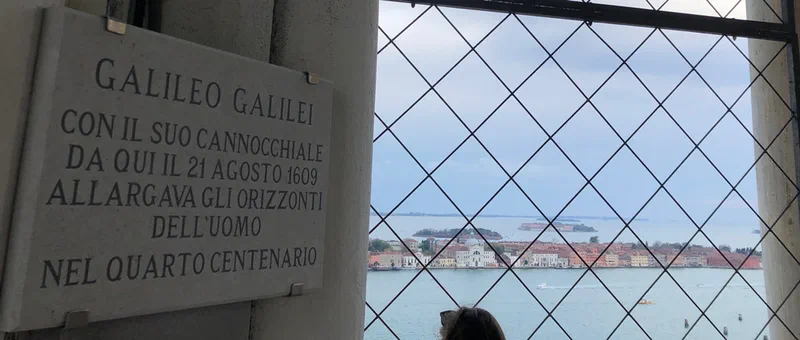
Galileo’s case is usually told as a clash between science and religion, but politics mattered just as much. His telescope observations and his defense of Copernican cosmology became publishable in part because the Venetian Republic gave him political cover. Without that cover, the work might not have spread far beyond his own notebooks.3
Stephen Toulmin called a related pattern the “Alexandrian Trap”: researchers become so invested in the formal structure of their arguments that they lose contact with what the arguments are about. The same thing has happened many times in the history of science, and a researcher who has seen it before is more likely to recognize it now.
The common thread is that scientific ideas do not survive on technical merit alone. They have to pass through the institutions, careers, and allegiances of the people who evaluate them, and those filters are still in place.
# How scientists are trained to ignore history
Most scientists are trained to see the history of their own field as irrelevant to their work. Science is taught as a sequence of results, and history gets reduced to a handful of anecdotes: Newton’s apple, Fleming’s moldy petri dish, Kekulé’s dream of the benzene ring. The context that produced those results, and the failures that shaped the methods used to produce them, falls out of the syllabus.
The contrast with law is instructive. A law student spends years reading old cases because legal practice is explicitly shaped by precedent, and an argument cannot be made without knowing what has been argued before. A scientist is usually trained the opposite way, told to evaluate current evidence on its own terms and to treat history as background color.
The cost is that the same lessons keep being relearned. A researcher who stumbles into the trap Semmelweis fell into will not recognize the pattern unless someone has taught it. The same holds for the political suppression of correct work, the premature abandonment of productive lines, and the slow acceptance of findings that should have been obvious at the time. None of this shows up in the current literature. It is in the historical record.
# The case against looking back
The counterargument is that science thrives by ignoring its history. Unlike law, where precedent is binding, science progresses by overturning earlier views, and being too attached to the history of a field encourages deference to ideas that should be discarded. A physicist who has internalized all of classical mechanics may have a harder time taking a radical departure from it seriously.
The view is consistent with how experimental science claims to work. A hypothesis is tested against evidence and either survives or does not, and the historical circumstances under which it was proposed do not change the outcome of the test. By that standard, history is at best irrelevant to the experiment and at worst a source of bias that gives too much weight to what was once believed.
This forward-only view has two problems. A hypothesis never gets evaluated in a vacuum: the judgment of which results are worth publishing, which data is clean enough to trust, and which directions are worth pursuing is not mechanical. Those judgments are made by researchers whose intuitions were built from experience, and experience is a kind of private history. The second problem is that the failure modes of past research are not random. They repeat, and a researcher who has studied them can see them coming.
# What history gives a researcher
Casadevall and Fang’s point is that science does not happen in a vacuum. Every result is produced inside a social and institutional context that shapes what questions were asked, what methods were used, and what findings got through peer review. A researcher who knows how that context has shaped past work is better equipped to recognize how it is shaping current work.
The practical effect is on judgment. A researcher familiar with how institutional pressures shaped Galileo’s and Semmelweis’s work is more likely to notice the same forces in a modern grant committee. A researcher who has seen productive research programs abandoned prematurely is less quick to give up on their own. A researcher who has studied how past discoveries were actually made is less likely to believe they came from isolated genius, which makes collaboration easier and setbacks less discouraging.4
Historical study also corrects a bias in how credit is distributed. Contributions from women and from scientists outside the dominant European and American institutions become visible only when someone goes back and reads the original literature. The same pattern holds for ethics: the rules that get written into codes of conduct were usually learned after something went wrong, and the case files for those events are in the historical record, not in the current methods section.
Looking back and looking forward are not in competition. The history of a field is the longest-running dataset about how research actually gets done in it, and ignoring that dataset means ignoring the one closest to hand.
Casadevall, A.; Fang, F. C. (A)Historical Science. Infect. Immun. 2015, 83 (12), 4460–4464. https://doi.org/10.1128/IAI.00921-15 . ↩︎
Kuhn, T. S.; Hacking, I. The Structure of Scientific Revolutions, 4th ed.; University of Chicago Press: Chicago, IL, USA, 2012. ↩︎
Rossi, P. The Birth of Modern Science; The making of Europe; Blackwell: Oxford, UK, 2001. ↩︎
For a concrete example, see my review of Vannevar Bush’s Pieces of the Action , a first-person account of running a large-scale research program during World War II. ↩︎